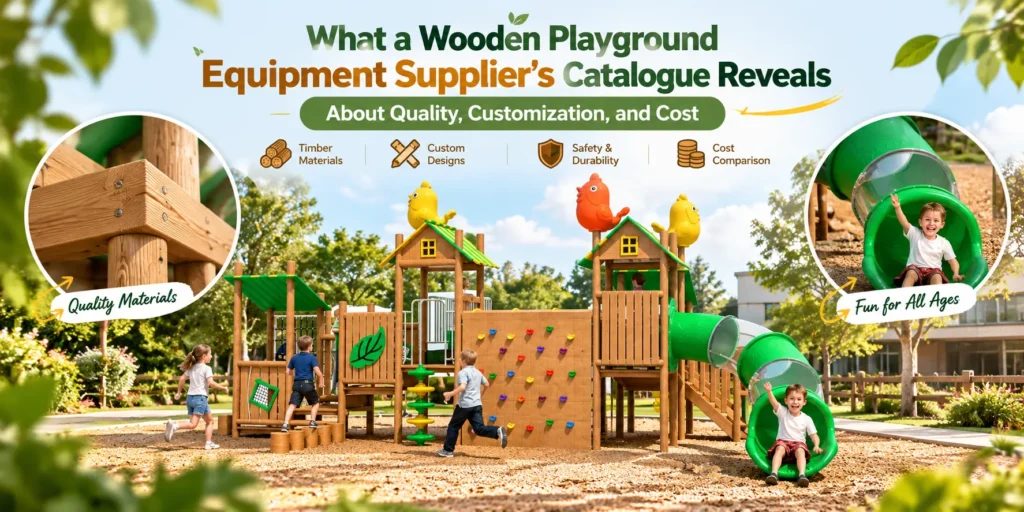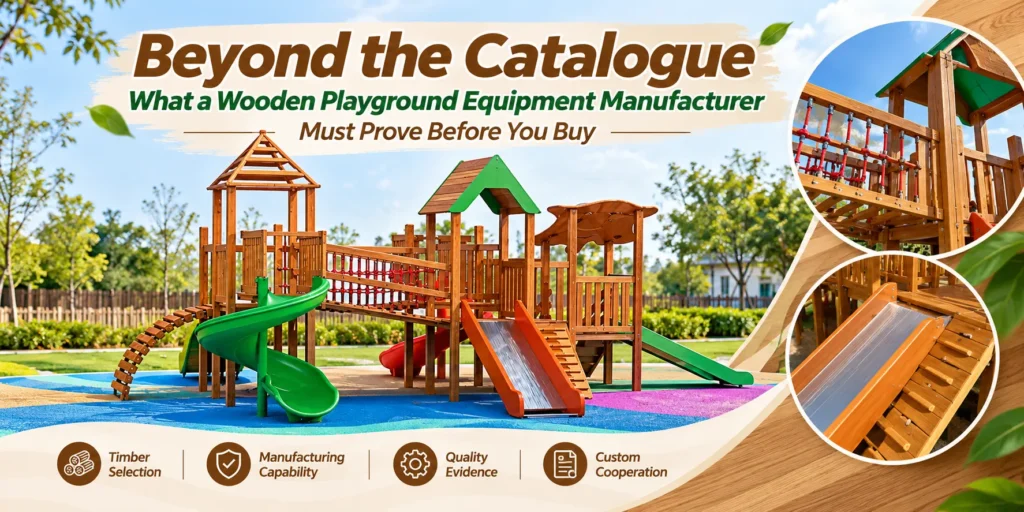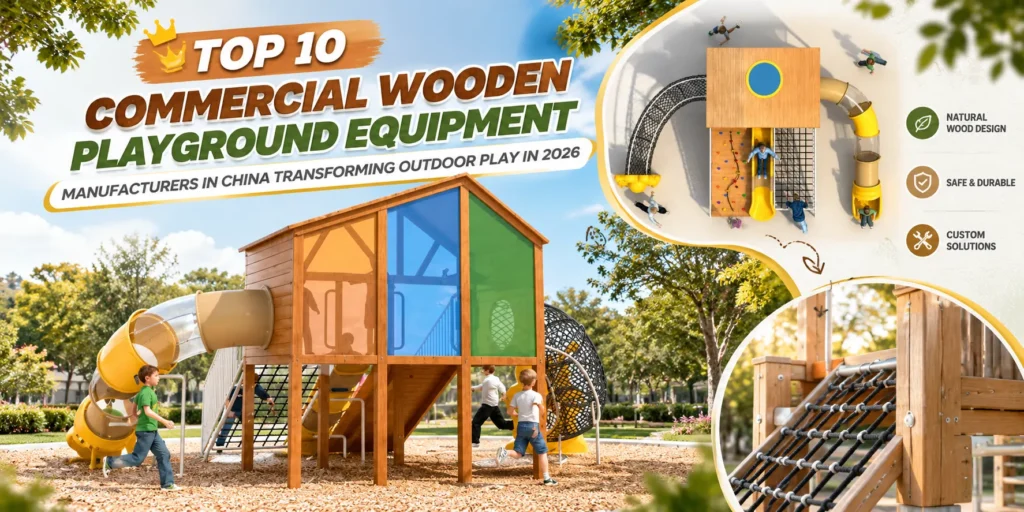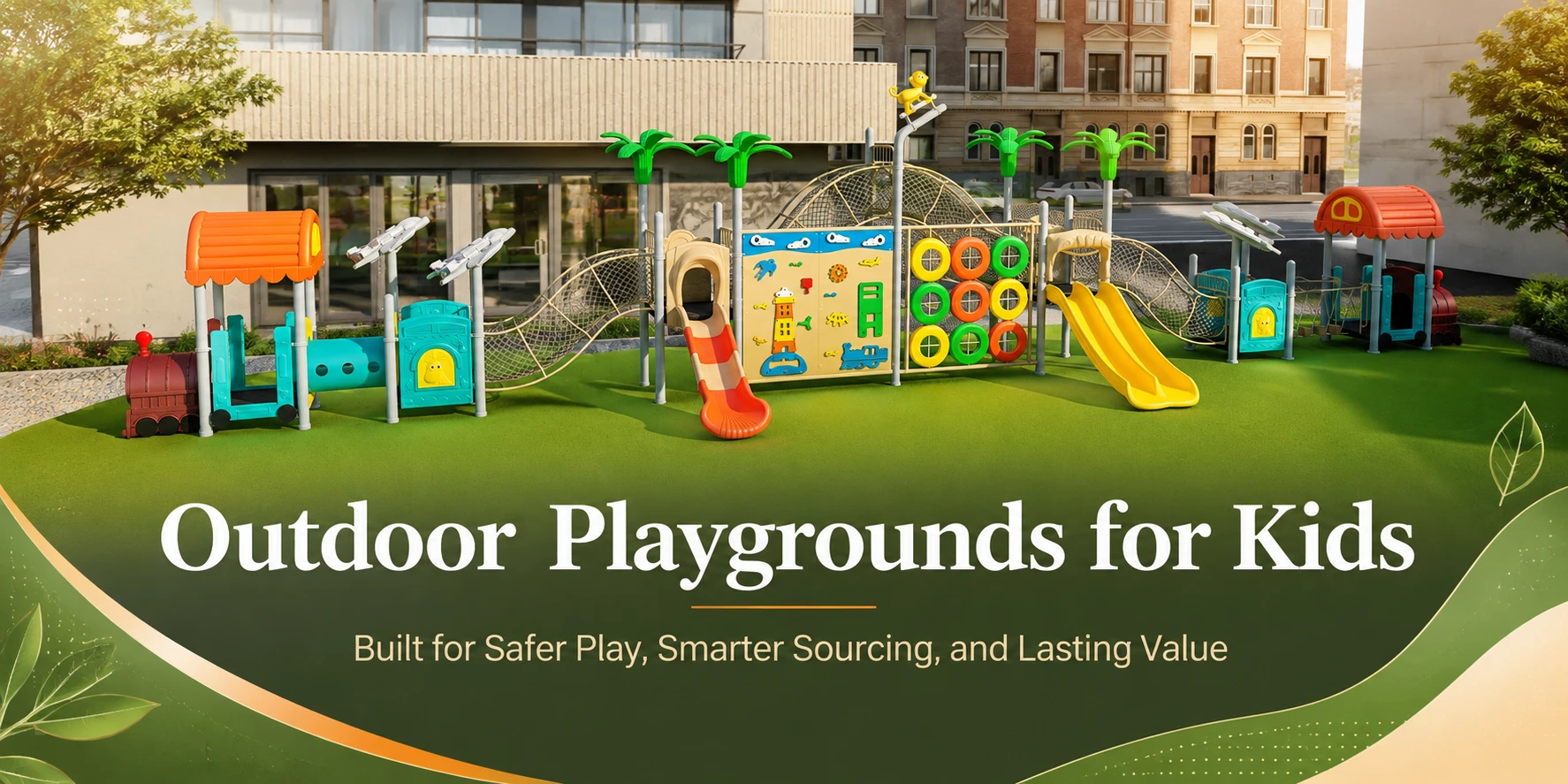
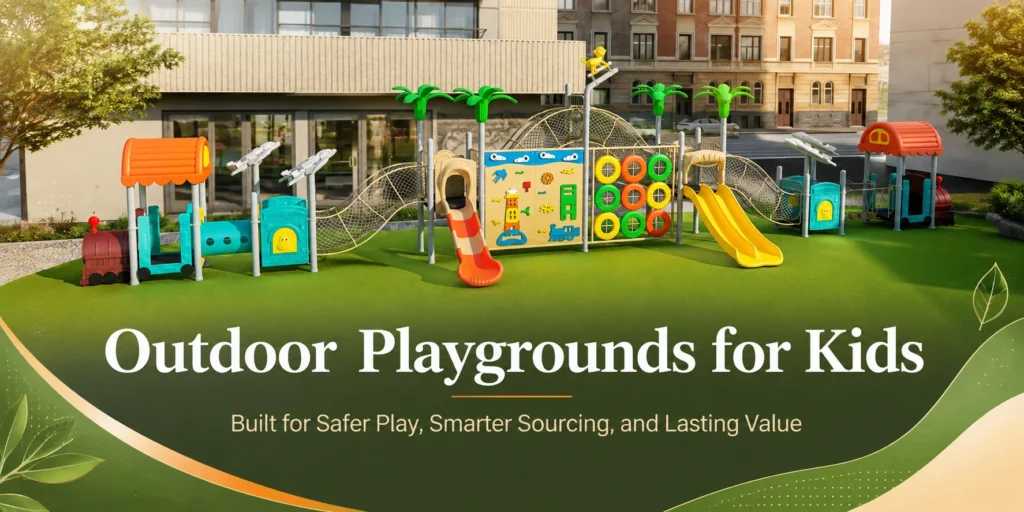
Buying outdoor playgrounds for kids rarely starts with a single product page. The market fragments into swing sets, wooden playhouses, modular jungle gyms, and mixed-material kits, each with different safety and sourcing requirements. Outdoor playground equipment for kids includes freestanding play structures built for backyards, schools, parks, and commercial play areas. To compare suppliers fairly, you need clear benchmarks across five factors: product ranges, materials, age suitability, space and permit planning, and total cost. Use those criteria to shortlist factories before requesting quotes.
Outdoor Playground Product Ranges: Swing Sets, Playhouses, and Modular Jungle Gyms
Product ranges vary more than buying guides suggest, so map each category to your target market when shortlisting suppliers.
- Swing sets. Arch, belt, and toddler bucket swings are the core configurations. Retailers including Backyard Discovery and Gorilla group these by seat count and frame type; confirm swing capacity and beam strength.
- Standalone playhouses. Ground-level or elevated units with verandas, windows, and optional sandpits. They suit younger children and need less fall-zone clearance than climbing frames.
- Modular jungle gyms. Kits combining monkey bars, slides, climbing walls, and elevated decks. The ActivPlay Modular Jungle Gym and Congo Monkey Play System show how component libraries generate multiple SKUs.
- Activity add-ons. Steering wheels, telescopes, chalkboards, and rope ladders are common upsell accessories.
Retail collections are organised by size, age, and material — apply the same triage when reviewing outdoor playground equipment Wenzhou factory catalogues.
Outdoor Playset Materials Compared: Wood, Vinyl, Metal, and Poly Options
When sourcing outdoor playgrounds for kids, weigh four materials before quoting.
Wood (Backyard Discovery, KidKraft): Cedar lasts 10–15 years with annual sealing; check for kiln-dried timber, splinter-free sanding, and child-safe stains.
Vinyl (Swing Kingdom): PVC over steel shrugs off moisture, wipes clean, and needs minimal upkeep; inspect seam welds for tearing.
Metal (Gorilla): Powder-coated galvanised steel gives the strongest frames, yet coating chips expose rust; verify coating thickness and rounded edges.
Poly (plastic): Recycled HDPE won’t rot, rust, or splinter and stays UV-stable; confirm resin grade and internal bracing for climbing loads.
Factory note: wood needs a treatment line, metal needs powder-coating capacity, poly needs recycled-resin supply — match material to verified processes.
Comparative quick view:
– Durability: metal > wood > poly > vinyl
– Maintenance: wood highest; vinyl and poly lowest
– Weather: poly best; metal worst unless coated
– Safety: poly and vinyl smoothest; wood needs sanding checks
Age Suitability and Size Limits for Kids’ Outdoor Playgrounds
A child can use a bucket-style toddler swing from around 6 months, provided they sit upright unassisted and the harness is fastened. Standard belt swings suit children aged 4 and up. Match equipment to these age bands:
- 6 months–3 years: bucket swings, low slides, and ground-level activity panels.
- 3–5 years: toddler-height slides, small climbing steps, and soft-strap swing seats.
- 5–8 years: full-size swings, climbing walls, and overhead rings.
- 8–12 years: tall slides, rope ladders, and multi-level play towers.
Age ratings also determine frame geometry. Swing hanger height, seat depth, and fall-zone clearance all follow the target age group, and compliance testing uses the same bands. KidKraft groups sets by age (‘Swing Sets for All Ages’), while Lowe’s buying guide lists age and height checks before purchase. For spacing, keep a use zone of at least 1.8 m around equipment; clear twice the pivot height in front of and behind swings.
Outdoor Playground Permits, Installation, and Space Planning
Permit requirements vary by area, so treat your local planning office as the final authority. A permit is typically triggered when a structure exceeds a set height or footprint limit, sits close to a boundary, or uses permanent footings or concrete anchors.
Permit checklist:
- Structure height and platform level
- Distance from fences, buildings, and boundary lines
- Permanently anchored ground posts or concrete footings
- Overhead cables and underground service lines
Ground preparation comes next: level the site, clear roots and stones, and lay a shock-absorbing surface such as rubber mulch or bonded matting. Installation is DIY-friendly for a two-person team over a weekend; a professional installer is worth the cost where ground slope or drainage is poor.
For buyers sourcing playground facility equipment, space planning belongs in the RFQ. Measure the yard, confirm the SKU footprint, and calculate clearance before ordering. Example: a set listed at 3.0 m wide with a 1.2 m slide overhang needs a 4.2 m clear width before adding its fall zone.
Buy vs Build Outdoor Playgrounds: Cost and Sourcing Assessment
For outdoor playgrounds for kids, pre-manufactured sets are cheaper than custom builds once you include engineering, compliance testing, and labour. DIY saves on materials but loads costs into fasteners, safety surfacing, and your own hours. The gap between Backyard Discovery and Gorilla shows how timber grade and warranty terms move the price for similar footprints.
| Option | Cost | Lead Time | Customisation | Compliance Risk | Warranty |
|---|---|---|---|---|---|
| Pre-manufactured | Moderate, predictable | Short (catalogue stock) | Limited to range | Low, pre-tested | Manufacturer-backed |
| DIY/custom build | Low materials, high labour | Long, weather-dependent | Full design freedom | High, falls on you | None unless engineered |
Factory-direct supply changes the equation. Sourcing custom playground equipment China-direct removes the retail mark-up, so a modified proven design costs about the same as a shelf product. The risk moves to shipping, compliance testing, and lead time. Verify timber treatment, paint safety, and anchoring hardware before committing, and put your playground equipment specifications into the contract.
About JQ Playground – wenzhouplaygroundequipment.com
JQ Playground (Wenzhou Jiqi Amusement Equipment Co., Ltd.) is a children’s playground equipment manufacturer founded in 1993. The company provides design, customization, large-scale manufacturing, sales, installation guidance, and after-sales support for outdoor playgrounds, indoor playgrounds, soft play, water playgrounds, PE board playgrounds, kindergarten furniture, outdoor fitness equipment, pet playgrounds, and playground facilities. Approved company facts include 180+ employees, a large Wenzhou production base, 20+ production lines, 55 production machines, ISO/BSCI/EN1176/EN71/ASTM/CPC/CPSIC certification references, 100+ patents, free design support, OEM/ODM capability, trial installation before shipping, export experience, and one-year quality warranty.